
Table of Contents
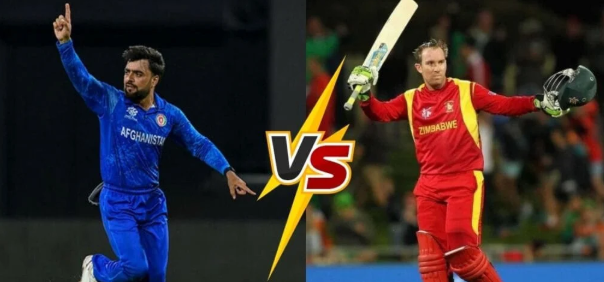
The rivalry between the Zimbabwe National Cricket Team and the Afghanistan National Cricket Team is a fascinating story of transition and rise in international cricket. While Zimbabwe represents experience and early establishment, Afghanistan has rapidly emerged as a competitive force. Their timeline showcases shifting dominance, thrilling encounters, and the evolution of two determined cricketing nations.
Latest Matches
| Tournament | Venue | Date | Toss | Afghanistan Score | Zimbabwe Score | Result | Series | Player of the Match |
| Bilateral T20I | Harare | Nov 2, 2025 | Afghanistan (bat) | 211/5 (20 overs) | 202/6 (20 overs) | Afghanistan won by 9 runs | Bilateral T20I | Rashid Khan (AFG) |
| Bilateral T20I | Harare | Oct 31, 2025 | Zimbabwe (field) | 128/3 (18.1 overs) | 126/9 (20 overs) | Afghanistan won by 7 wkts | Bilateral T20I | Ibrahim Zadran (AFG) |
| Bilateral T20I | Harare | Oct 29, 2025 | Afghanistan (bat) | 181/6 (20 overs) | 128 (16.1 overs) | Afghanistan won by 53 runs | Bilateral T20I | Shahidullah (AFG) |
| Only Test | Harare | Oct 20-22, 2025 | Afghanistan (bat) | 127 & 159 | 359 | Zimbabwe won by an innings & 73 runs | Bilateral Test | Blessing Muzarabani (ZIM) |
| Bilateral Test | Bulawayo | Jan 2-6, 2025 | Zimbabwe (field) | 363 | 157 & 205 | Afghanistan won by 72 runs | Bilateral Test | Rashid Khan (AFG) |
| Bilateral Test | Bulawayo | Dec 26-30, 2024 | Zimbabwe (bat) | 699 & 142/4 | 586 | Match drawn | Bilateral Test | Hashmatullah Shahidi (AFG) |
| Bilateral ODI | Harare | Dec 21, 2024 | Afghanistan (field) | 131/2 (26.5 overs) | 127 (30.1 overs) | Afghanistan won by 8 wkts | Bilateral ODI | AM Ghazanfar (AFG) |
| Bilateral ODI | Harare | Dec 19, 2024 | Zimbabwe (field) | 286/6 (50 overs) | 54 (17.5 overs) | Afghanistan won by 232 runs | Bilateral ODI | Sediqullah Atal (AFG) |
| Bilateral ODI | Harare | Dec 17, 2024 | Afghanistan (field) | – | 44/5 (9.2 overs) | No Result | Bilateral ODI | Not awarded |
| Bilateral T20I | Harare | Dec 14, 2024 | Afghanistan (field) | 128/7 (19.3 overs) | 127 (19.5 overs) | Afghanistan won by 3 wkts | Bilateral T20I | Azmatullah Omarzai (AFG) |
| Bilateral T20I | Harare | Dec 13, 2024 | Afghanistan (bat) | 153/6 (20 overs) | 103 (17.4 overs) | Afghanistan won by 50 runs | Bilateral T20I | Darwish Rasooli (AFG) |
| Bilateral T20I | Harare | Dec 11, 2024 | Afghanistan (bat) | 144/6 (20 overs) | 145/6 (20 overs) | Zimbabwe won by 4 wkts | Bilateral T20I | Brian Bennett (ZIM) |
ICC & Asia Cup Matches Timeline
| Tournament | Venue | Date | Afghanistan Score | Zimbabwe Score | Result | Player of the Match |
| ICC Men’s T20 World Cup | Vidarbha Cricket Association Stadium, Nagpur, India | March 11, 2016 | 186/6 (20 overs) | 127 (19.4 overs) | Afghanistan won by 59 runs | Mohammad Nabi (AFG) |
Top 5 Standout Performances
| Rank | Player | Performance | Match Details | Format | Date | Impact |
| 1 | Hashmatullah Shahidi (AFG) | 246 runs | 1st Test, Bulawayo | Test | January 2025 | Afghanistan’s highest Test score ever; helped set record totals |
| 2 | Rahmat Shah (AFG) | 234 runs + 364-run partnership | 1st Test, Bulawayo | Test | January 2025 | Record 3rd-wicket stand for Afghanistan in Tests |
| 3 | Mohammad Shahzad (AFG) | 118* | T20I bilateral series | T20I | 2015/16 | Explosive opening knock; highest individual T20I score in rivalry |
| 4 | Rahmanullah Gurbaz (AFG) | 87 runs | T20I, Sheikh Zayed Stadium, Abu Dhabi | T20I | March 2021 | Match-winning aggressive innings in big chase |
| 5 | Brian Bennett (ZIM) | 110 runs + 5/95 | 1st Test, Bulawayo | Test | January 2025 | All-round heroics; career-best in both departments |
Head-to-Head & Key Performers Overview
| Format | Matches Played | Afghanistan Wins | Zimbabwe Wins | No Result/Draw | Afghanistan’s Highest Score | Zimbabwe’s Highest Score |
| T20I | 15+ | 12 | 3 | 0 | 215 | 190 |
| ODI | 27+ | 20 | 6 | 1 | 286 | 235 |
| Test | 2 | 1 | 0 | 1 | 699 | 586 |
Early Encounters and Zimbabwe’s Experience (2009–2013)
The initial clashes between Zimbabwe and Afghanistan began when Afghanistan was still an emerging cricket nation striving to establish itself on the global stage. Zimbabwe, with decades of international experience, entered these matches as favorites. Their structured gameplay and familiarity with international conditions gave them an advantage. Afghanistan, however, showed glimpses of potential with their aggressive style and raw talent. Matches during this period were competitive but generally tilted in Zimbabwe’s favor. Afghanistan’s players, many of whom had risen through rapid development programs, gained valuable exposure by facing an experienced side. These early encounters were crucial for Afghanistan’s growth and confidence. Zimbabwe’s dominance reflected their established status, but Afghanistan’s determination hinted at a changing dynamic in the future. This phase laid the foundation for a rivalry that would soon become much more balanced and intense.
| Year | Event | Winner | Venue |
| 2009 | ICC Qualifier | Zimbabwe | South Africa |
| 2010 | ODI Series | Zimbabwe | Zimbabwe |
| 2013 | ICC Event | Zimbabwe | Neutral |
Afghanistan’s Rapid Rise (2014–2017)
Between 2014 and 2017, Afghanistan transformed into a formidable cricketing nation, significantly altering the balance of power against Zimbabwe. Their qualification for major ICC tournaments and consistent performances highlighted their rapid progress. Afghanistan’s spin attack, led by world-class bowlers, became a major strength, challenging Zimbabwe’s batting lineup. During this period, Afghanistan began securing important victories against Zimbabwe in both ODIs and T20 formats. Zimbabwe struggled with consistency and internal challenges, allowing Afghanistan to capitalize. Matches became more competitive, with Afghanistan often dominating key moments. This era marked a turning point where Afghanistan was no longer an underdog but a serious contender. Their rise added intensity to the rivalry, making every encounter unpredictable and exciting for fans.
| Year | Series/Event | Winner | Highlight |
| 2014 | ODI Series | Afghanistan | Breakthrough Wins |
| 2016 | T20 Series | Afghanistan | Spin Dominance |
| 2017 | ICC Matches | Afghanistan | Rising Power |
Test Cricket Milestones and Historic Matches (2018–2019)
A significant milestone in the Zimbabwe vs Afghanistan timeline came with the introduction of Test cricket between the two teams. Afghanistan, having gained Test status in 2017, faced Zimbabwe in historic matches that marked their entry into the longest format. These encounters were closely contested, showcasing both teams’ determination to establish themselves in Test cricket. Zimbabwe relied on their experience, while Afghanistan brought energy and aggressive gameplay. Matches during this period were competitive and often unpredictable. Afghanistan managed to secure notable victories, highlighting their adaptability across formats. These Tests symbolized the growth of both teams and their commitment to competing at the highest level. The rivalry gained depth and significance as it expanded beyond limited-overs formats.
| Year | Format | Winner | Highlight |
| 2018 | Test Match | Afghanistan | Historic Win |
| 2019 | Test Series | Afghanistan | Strong Performance |
| 2019 | ODI Series | Afghanistan | Consistency |
Afghanistan’s Dominance Phase (2020–2022)
From 2020 to 2022, Afghanistan established clear dominance over Zimbabwe across formats. Their consistent performances, particularly in limited-overs cricket, made them a stronger side. Afghanistan’s bowling attack, combined with improved batting depth, proved too challenging for Zimbabwe. During this period, Afghanistan won multiple series, showcasing their growth as a competitive international team. Zimbabwe, meanwhile, continued to rebuild and struggled with consistency. Matches were often one-sided, with Afghanistan controlling most aspects of the game. This phase highlighted the shift in power within the rivalry, as Afghanistan emerged as the dominant force. Their success reflected years of development and investment in cricket, making them one of the fastest-rising teams in the sport.
| Year | Series | Winner | Highlight |
| 2020 | T20 Series | Afghanistan | Strong Wins |
| 2021 | ODI Series | Afghanistan | Dominance |
| 2022 | Bilateral Series | Afghanistan | Consistent Performance |
Zimbabwe’s Fightback and Competitive Matches (2023–Present)
In recent years, Zimbabwe has shown signs of improvement, leading to more competitive matches against Afghanistan. With emerging players and better team structure, Zimbabwe has begun to challenge Afghanistan more effectively. Matches have become closer, with both teams displaying strong performances. Afghanistan still holds an advantage, but Zimbabwe’s resilience has added excitement to the rivalry. Bilateral series and ICC tournaments have produced thrilling encounters, often decided in the final overs. This period reflects a more balanced competition, with both teams striving to strengthen their positions in international cricket. Zimbabwe’s gradual comeback ensures that the rivalry remains engaging and unpredictable for fans.
| Year | Series/Event | Winner | Highlight |
| 2023 | ODI Series | Afghanistan | Close Matches |
| 2024 | T20 Series | Zimbabwe | Fightback |
| 2025 | Bilateral Series | — | Competitive Games |
Key Players and Match-Winning Performances
The Zimbabwe vs Afghanistan rivalry has been shaped by several standout players who delivered match-winning performances. Afghanistan’s stars like Rashid Khan and Mohammad Nabi have dominated with their all-round abilities, especially in spin bowling and finishing roles. Zimbabwe has relied on players like Sikandar Raza and Sean Williams to provide stability and leadership. These players have often been the difference in closely contested matches. Their individual brilliance has elevated the rivalry, creating memorable moments for fans. Afghanistan’s players have brought aggression and consistency, while Zimbabwe’s stars have shown resilience and determination. The contributions of these key players have defined the outcomes of many matches and added depth to this evolving rivalry.
| Player | Team | Era | Contribution |
| Rashid Khan | Afghanistan | Modern Era | Spin Wizard |
| Mohammad Nabi | Afghanistan | Modern Era | All-round Impact |
| Sikandar Raza | Zimbabwe | Modern Era | Match Winner |
| Sean Williams | Zimbabwe | Modern Era | Consistent Performer |
Future Outlook and Growing Rivalry
The future of the Zimbabwe vs Afghanistan rivalry looks promising as both teams continue to evolve. Afghanistan’s strong foundation and consistent performances suggest they will remain a dominant force, while Zimbabwe’s rebuilding efforts indicate a potential resurgence. Increased opportunities in ICC tournaments and bilateral series will further strengthen their competition. This rivalry represents the growth of cricket beyond traditional powerhouses, showcasing how emerging teams can compete at high levels. With young talent emerging on both sides, future encounters are expected to be even more competitive and exciting. The rivalry is set to grow in importance, contributing to the global expansion and popularity of cricket.
| Aspect | Zimbabwe | Afghanistan | Impact |
| Strength | Experience | Spin Attack | Balanced Rivalry |
| Challenge | Consistency | Pressure Matches | Competitive Growth |
| Future | Rebuilding | Rising Power | Exciting Contests |
Conclusion
The timeline of the Zimbabwe National Cricket Team vs Afghanistan National Cricket Team rivalry reflects a journey of shifting dominance and rapid development. From Zimbabwe’s early control to Afghanistan’s rise as a powerful cricketing nation, the rivalry has evolved into a competitive and engaging contest. Both teams have showcased resilience, talent, and determination, contributing to exciting matches across formats. As Zimbabwe continues to rebuild and Afghanistan strengthens its position, the rivalry promises even greater intensity in the future. With emerging players and growing experience, their encounters will remain a vital part of international cricket, inspiring fans and highlighting the sport’s global growth.