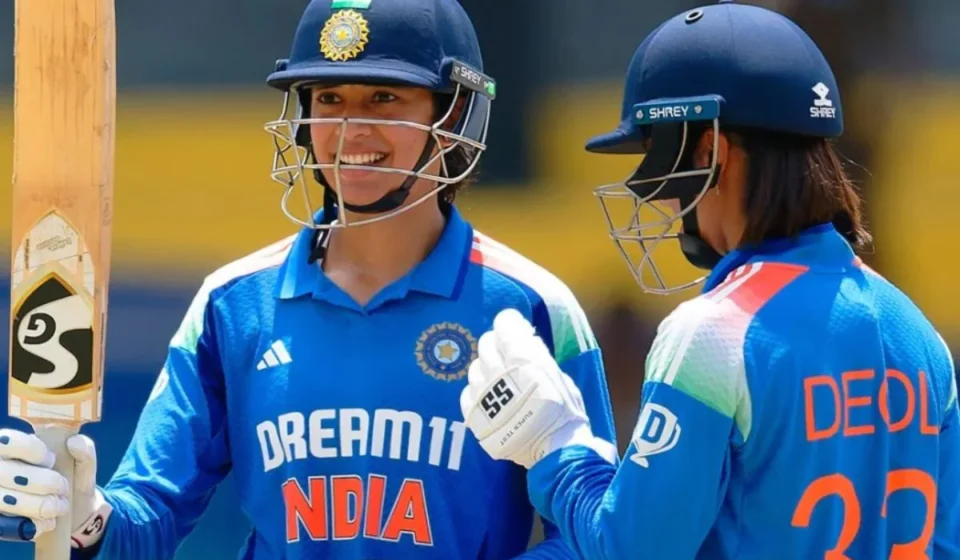
Sri Lanka Women vs India Women’s National Cricket Team Matches: Head-to-Head Record, Results, and History

Table of Contents
Sri Lanka Women vs India Women’s National Cricket Team matches have been an important part of women’s international cricket in Asia. These teams regularly compete in One Day Internationals (ODIs), Twenty20 Internationals (T20Is), and major tournaments such as the ICC Women’s Cricket World Cup, ICC Women’s T20 World Cup, and the Women’s Asia Cup. Their contests bring together India’s depth and experience with Sri Lanka’s determination, tactical discipline, and talented match-winners.
India Women have generally enjoyed the stronger overall record in this rivalry, particularly across ODI cricket. However, Sri Lanka Women have produced memorable performances, especially in T20 cricket and regional tournaments. Their matches can be competitive when Sri Lanka’s top order builds a strong platform, its bowlers restrict India’s scoring, and its fielders maintain pressure throughout the innings.
This article explores the history of Sri Lanka Women vs India Women’s National Cricket Team matches, their head-to-head rivalry, formats, notable encounters, key players, and the factors that influence their results.
Sri Lanka Women vs India Women Matches: Overview
India and Sri Lanka have faced each other in women’s international cricket across several decades. India’s women’s team has traditionally benefited from a larger pool of experienced international players, while Sri Lanka has developed its own generation of influential batters, all-rounders, and bowlers.
The rivalry is significant because both countries compete regularly in Asian tournaments. Their encounters offer valuable preparation for global competitions and provide opportunities for emerging players to gain experience against established international opponents.
| Match detail | Overview |
|---|---|
| Teams | Sri Lanka Women and India Women |
| Governing format | International women’s cricket |
| Formats | Tests, ODIs, and T20Is where applicable |
| Regional competition | Women’s Asia Cup |
| Global competitions | ICC Women’s Cricket World Cup and ICC Women’s T20 World Cup |
| General historical trend | India Women have held the advantage overall |
| Key factors | Batting partnerships, spin bowling, fielding, and pressure management |
Exact head-to-head totals vary depending on the format and the date of the statistics being used. For an accurate record, ODI and T20I results should be counted separately, and any Test encounters should be treated as a distinct category.
Head-to-Head Record Between Sri Lanka Women and India Women
The head-to-head record provides a useful way to understand the balance of this rivalry. India Women have generally won more matches than Sri Lanka Women in both ODIs and T20Is. Their record reflects consistent performances across bilateral series and multinational tournaments.
However, head-to-head numbers should be interpreted in context. A team’s overall win count does not explain every match, and results can be affected by the venue, pitch conditions, weather, team selection, and the form of individual players.
ODI Head-to-Head Rivalry
One Day Internationals have played a major role in the rivalry. The 50-over format rewards teams that can combine a reliable batting foundation with disciplined bowling over a longer period.
India Women have historically been strong in ODI cricket because of their experienced batters, all-rounders, and varied bowling attack. They can build innings patiently before accelerating in the final overs. Their bowling unit has also frequently been able to use spin and changes of pace to control the middle overs.
Sri Lanka Women, meanwhile, have looked to create opportunities through aggressive top-order batting, partnerships, and effective spin bowling. When Sri Lanka’s batters remain at the crease for a substantial period, the team can put pressure on India’s bowlers and establish a competitive total.
| ODI factor | India Women | Sri Lanka Women |
|---|---|---|
| Batting approach | Build partnerships and accelerate later | Combine stability with attacking phases |
| Bowling strategy | Use pace, spin, and tactical variation | Use spin and changes of pace to create pressure |
| Main objective | Control the innings across 50 overs | Challenge India’s rhythm and capitalize on key moments |
| Important phase | Middle overs and final batting overs | Powerplay and middle-over breakthroughs |
T20I Head-to-Head Rivalry
T20 Internationals have added a different dimension to this matchup. With only 20 overs per innings, teams have less time to recover from a poor start. Quick scoring, accurate death bowling, and sharp fielding often determine the outcome.
India Women have generally held the advantage in this format as well, but Sri Lanka Women can be dangerous when their leading batters attack early and their bowlers prevent India from building momentum.
The T20I format also highlights the value of all-rounders. Players who can contribute with both bat and ball give captains more options when adapting to changing match situations.
| T20I match phase | What usually matters |
|---|---|
| Powerplay | Taking early wickets or scoring quickly without losing too many batters |
| Middle overs | Rotating the strike and attacking suitable bowling options |
| Final overs | Converting wickets in hand into a strong finish |
| Bowling at the death | Limiting boundaries through accurate execution |
| Fielding | Saving runs and creating wicket-taking opportunities |
Historical Timeline of Sri Lanka Women vs India Women Matches
The rivalry has developed through bilateral tours, Asia Cup competitions, and ICC tournaments. The following timeline summarizes important stages in the teams’ relationship rather than presenting an unverified list of every match.
Early Years of the Rivalry
In the earlier years of women’s international cricket between the two nations, India Women developed a stronger international structure and gained experience through regular competition. Sri Lanka Women continued building their presence in international cricket and worked to close the gap against more established teams.
These encounters helped both sides develop players capable of competing at the highest level. They also strengthened the regional importance of women’s cricket in South Asia.
Growth Through ODI Cricket
As women’s ODI cricket became more established, matches between India and Sri Lanka became an important part of their international schedules. The longer format tested batting technique, patience, and the ability to maintain pressure over an extended innings.
India often entered these matches with greater depth in its batting lineup, while Sri Lanka sought to challenge that advantage through bowling discipline and effective partnerships.
Women’s Asia Cup Encounters
The Women’s Asia Cup has been one of the most important settings for this rivalry. The tournament brings regional teams together in high-pressure matches where a single result can influence qualification and progress toward the final.
India Women have been a consistently successful side in the competition. Sri Lanka Women have also produced strong campaigns and demonstrated that they can challenge leading Asian teams when their batting and bowling units perform together.
Asia Cup matches carry particular importance because the teams are familiar with one another’s styles. Captains must make tactical adjustments, select bowlers carefully, and respond quickly when a batter begins to dominate.
The Rise of T20 International Cricket
The expansion of women’s T20 cricket brought more attention to the matchup. Shorter games created opportunities for players to influence results through aggressive batting, economical bowling, and athletic fielding.
India’s experience in high-pressure T20 matches has generally been an advantage. Sri Lanka, however, has continued to develop players who can change the direction of a game with a quick scoring burst or a series of economical overs.
Recent Competitive Era
In the modern era, greater investment in women’s cricket, improved domestic pathways, and more international exposure have helped raise the standard of competition. India and Sri Lanka now approach their matches with a broader range of tactical options.
For a season-by-season record, the most reliable approach is to consult individual scorecards and separate the results by format. This avoids mixing bilateral games with tournament matches or counting the same encounter more than once.
Memorable Matches Between Sri Lanka Women and India Women
Several types of encounters stand out in this rivalry. While individual scorecards are necessary to verify the exact date, score, and margin for a specific historic match, the following match situations illustrate why these fixtures attract attention.
Close Finishes in T20 Cricket
T20 matches can remain undecided until the final overs. A few boundaries, a wicket in the middle overs, or an accurate final over can change the result quickly.
When Sri Lanka Women chase a target, maintaining wickets while keeping up with the required run rate is essential. India Women can create pressure by using spin and varying their pace. In the reverse situation, Sri Lanka’s bowlers need to limit boundaries and force India’s batters to take risks.
ODI Matches Decided by Partnerships
In ODIs, a long batting partnership can determine the course of a match. A team that loses early wickets may struggle to recover, while a steady middle-order stand can rebuild the innings.
India Women’s batting depth has often helped the team recover from difficult starts. Sri Lanka Women have also shown the importance of partnerships, particularly when chasing competitive totals or rebuilding after early wickets.
Tournament Matches Under Pressure
Asia Cup and ICC tournament matches have added significance because teams are competing for more than a bilateral series result. Net run rate, qualification scenarios, and momentum can all influence decision-making.
In these situations, captains must balance attacking cricket with the need to avoid unnecessary risks. Bowlers need clear plans, and batters must assess whether the match calls for a rapid scoring rate or a more patient approach.
Key Players in the Sri Lanka Women vs India Women Rivalry
Individual performances have shaped the history of these matches. Several players have influenced the contest through their batting, bowling, leadership, and all-round contributions.
India Women’s Important Contributors
India’s international setup has featured experienced batters, technically strong middle-order players, pace bowlers, spinners, and all-rounders. These roles are particularly important against Sri Lanka because the team must adapt to different conditions and styles of bowling.
India’s batters generally aim to build a platform before accelerating, while the bowling unit seeks to take wickets at regular intervals. All-rounders help maintain balance and allow the captain to rotate bowlers according to match conditions.
Sri Lanka Women’s Important Contributors
Sri Lanka’s success often depends on its leading batters and the ability of its bowling attack to disrupt partnerships. Experienced all-rounders can be especially influential because they contribute in more than one department.
Sri Lanka also benefits when its players remain disciplined in the field. Against a team with India’s batting depth, dropped catches and missed run-out opportunities can prove costly.
The Importance of Team Balance
A balanced lineup can be more valuable than relying on one star player. Teams need a combination of top-order stability, middle-order power, all-round options, specialist bowlers, and dependable fielders.
In this rivalry, the side that manages its resources effectively across the innings often gives itself the best chance of winning.
Venues and Conditions That Influence the Matches
Playing conditions can significantly affect the outcome of Sri Lanka Women vs India Women matches. The venue determines how the pitch behaves, how much assistance bowlers receive, and whether batting becomes easier as the game progresses.
Conditions in India
Indian pitches can vary considerably from venue to venue. Some surfaces support stroke-making, while others offer assistance to spinners as the match develops. Teams playing in India must assess the surface carefully before choosing their combination.
For visiting Sri Lanka Women, handling spin and rotating the strike can be important. India Women, in turn, need to use local knowledge to select appropriate bowling options and identify favorable matchups.
Conditions in Sri Lanka
Sri Lankan venues can also present varied conditions depending on the ground, weather, and surface preparation. Humidity, rain interruptions, and the behavior of the pitch may influence team strategy.
India Women need to adapt rather than assume that their home conditions will translate directly. Sri Lanka Women can benefit from familiarity with local surfaces, but must still execute their plans consistently.
Toss and Weather
The toss can affect decisions about batting first or chasing, particularly when rain threatens or conditions may change later in the match. However, the toss alone does not determine the result.
A team batting first must establish a defendable total, while the chasing side needs to manage the required run rate without losing wickets too quickly. Good decision-making remains important in either situation.
Tactical Comparison: How India Women and Sri Lanka Women Approach Matches
The teams often differ in their available resources, but both need to execute a clear strategy to succeed.
| Tactical area | India Women’s potential strength | Sri Lanka Women’s route to success |
|---|---|---|
| Batting depth | Multiple options across the order | Build partnerships and maximize key batters |
| Spin bowling | Several options for controlling middle overs | Use spin effectively to interrupt scoring |
| Pace bowling | Mix of new-ball and death-over options | Maintain accuracy and exploit pressure |
| All-rounders | Flexibility in team selection | Gain value from multi-skill players |
| Fielding | Convert pressure into wickets | Save runs and capitalize on opportunities |
| Match management | Experience in major tournaments | Stay composed and take calculated risks |
These are broad tactical tendencies rather than guarantees. Team combinations change from series to series, and the players selected for a particular match can alter the balance significantly.
Why Sri Lanka Women vs India Women Matches Matter
This rivalry is important for the development and visibility of women’s cricket in South Asia. India’s large domestic structure and international experience make its team a major benchmark for regional competitors. Sri Lanka’s performances provide opportunities to demonstrate the growth of its own cricketing talent.
These matches also help teams prepare for global tournaments. Captains can test combinations, evaluate younger players, and assess how their strategies perform against a familiar opponent.
For supporters, the matchup offers a mix of regional competition, tactical battles, and individual performances. The results can influence tournament standings, confidence, and future selection decisions.
How to Check the Latest Match Results and Head-to-Head Statistics
Anyone researching Sri Lanka Women vs India Women’s National Cricket Team matches should check the format and date range before comparing totals. ODI and T20I records are different, and a combined total can be misleading if the categories are not clearly defined.
For an accurate comparison, review these details:
- Total ODIs played, won by India Women, and won by Sri Lanka Women.
- Total T20Is played and the wins recorded by each team.
- Any drawn or tied matches, abandoned games, or no-results.
- Recent bilateral series results.
- Women’s Asia Cup encounters.
- ICC tournament meetings.
- The most recent match scorecard, including venue, date, innings totals, and result.
A useful head-to-head table should include a clear “updated through” date. This is particularly important because each new international series can change the overall totals.
Frequently Asked Questions
1. Which team has historically performed better in Sri Lanka Women vs India Women matches?
India Women have generally enjoyed the stronger overall record in women’s international cricket against Sri Lanka Women. However, results differ by format, tournament, and period, so a precise comparison should use separate ODI and T20I totals.
2. In which formats do Sri Lanka Women and India Women compete?
The teams compete in women’s ODIs and T20 Internationals, and their historical international records should be checked separately for any Test matches. They also meet in regional and global tournaments when drawn into the same competition.
3. Why are Women’s Asia Cup matches between these teams important?
Asia Cup matches contribute to tournament standings and can determine which teams advance to later stages. They also allow both sides to test their strategies against a familiar regional opponent.
4. What factors usually decide a match between Sri Lanka Women and India Women?
Batting partnerships, early wickets, middle-over scoring, spin bowling, death-over execution, and fielding are all important. Weather and pitch conditions can also influence the match, especially when teams are chasing a target.
5. Where can readers find the latest Sri Lanka Women vs India Women match results?
Readers should consult current cricket scorecards and official tournament results for the latest dates, scores, and outcomes. They should also check whether the record covers ODIs, T20Is, or a specific tournament before comparing head-to-head totals.
Conclusion
Sri Lanka Women vs India Women’s National Cricket Team matches represent a long-running rivalry in Asian women’s cricket. India Women have generally maintained the stronger overall record, supported by batting depth, international experience, and a variety of bowling options. Sri Lanka Women remain competitive when their leading players build partnerships, their bowlers maintain pressure, and the team performs consistently in the field.
The rivalry continues to develop through bilateral series, Women’s Asia Cup fixtures, and international tournaments. For readers tracking its history, the best way to understand the contest is to examine format-specific head-to-head records, significant scorecards, and recent performances rather than relying on a single combined statistic. Each new encounter adds another chapter to a matchup that remains important for both teams and for women’s cricket across the region.

